Great products begin with a feeling. And take shape through expertise.
We’re SkinTech Lab, a Melbourne-based contract manufacturing partner. We bring together formulation, product development, manufacturing and filling, with your brief at the heart of the process.
From a first spark to a developed concept, we help connect the details that make it yours.
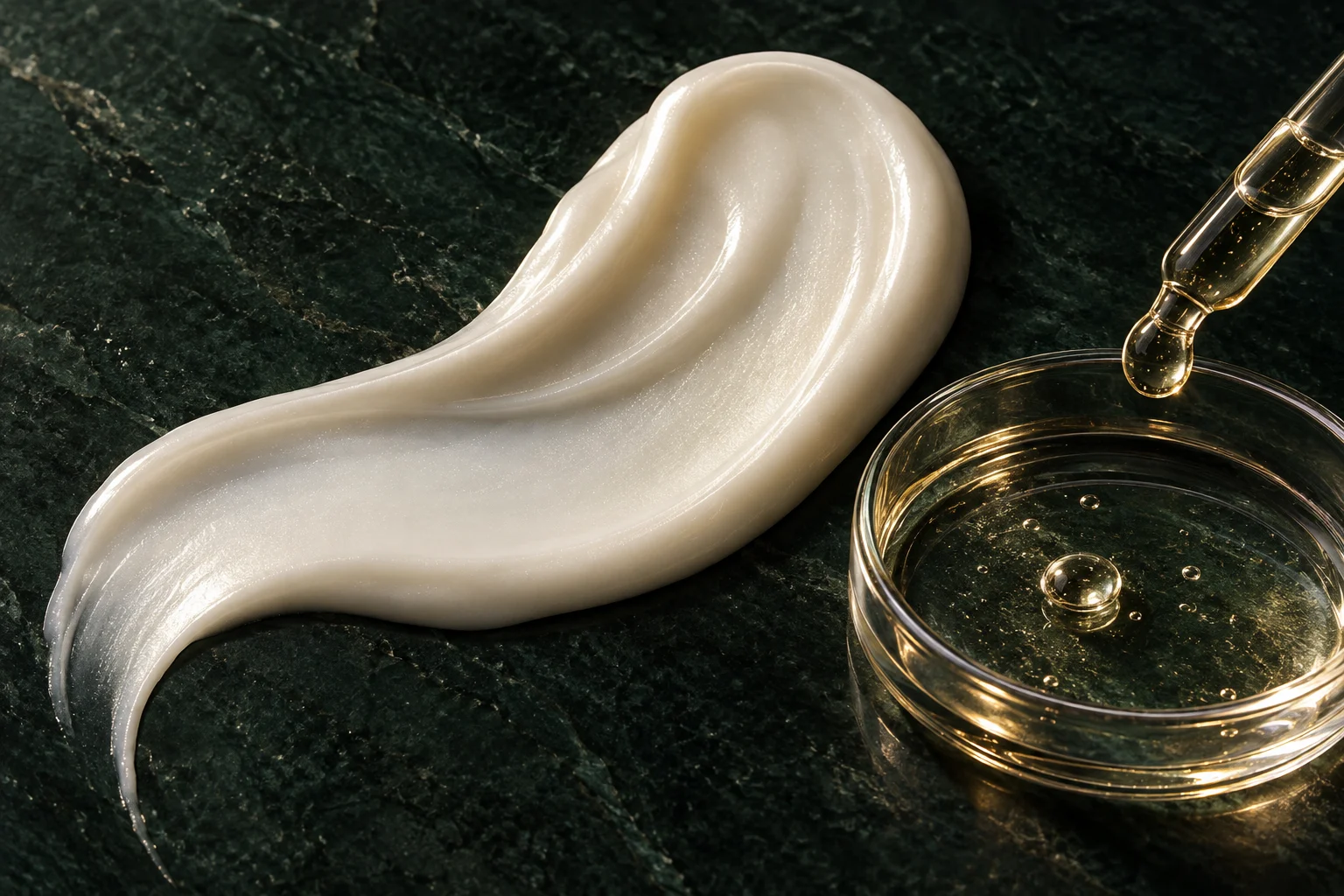
Texture study / Artistic concept, not an actual product or facility.
02 / Our expertiseOne brief. A connected approach.
Every detail. Considered.
One partner to help you connect what’s imagined with what’s possible.
01
Formulation & development
+
Explore ingredients, texture, application and product format. Research, development and formulation consulting shaped around the experience you want to create.
Bring
Your audience, product purpose and the experience you imagine.
Discuss
Texture, application, ingredient preferences and practical constraints.
Agree
The development scope, review points and information needed next.
Connect development and production. Discuss pilot production, scale-up and contract manufacturing around agreed product specifications and the wider brief.
Bring
The product direction, available specifications and packaging status.
Discuss
Indicative quantities, materials, responsibilities and schedule dependencies.
Agree
Project suitability and scope before any production commitment.
02 / Development planningA considered path. Not a fixed formula.
The thinking between the steps.
A product is a series of connected decisions. Explore a planning map for the conversations that can give an idea direction.
Illustrative planning map only. Actual scope, testing, quantities and timing are agreed for each project. Steps may overlap, repeat or change; this is not a promise of capability, approval or a particular outcome.
Begin with the experience you want someone to have. A clear brief connects the intended user, product purpose and commercial context without pretending every answer is already known.
Bring to the conversation
Who the product is for and where it fits into a routine.
The product category, intended market and support you are seeking.
Reference textures or packaging ideas, shared without confidential third-party information.
Decisions to record
Separate what is essential from what is open to exploration. Record assumptions, questions and who needs to make each decision.
A useful starting point: one product direction, one intended audience and a short list of priorities.
02 / Develop
Give the idea a technical direction.
Translate the brief into topics for development discussion. Ingredient preferences, product format and desired feel need to be considered alongside practical constraints and the agreed scope.
Explore the relationships
Desired texture, application, fragrance direction and appearance.
Ingredient preferences or exclusions, with their reasons.
How the proposed formula, intended use and packaging may affect one another.
Decisions to record
Agree which questions need investigation, which work is in scope and what information is needed before proceeding. Identify relevant specialist or regulatory advice where required.
A formulation direction is not evidence for a product claim, approval or suitability for a market.
03 / Refine
Make feedback specific enough to use.
Where sample development is agreed, treat each iteration as a documented conversation. Describe the experience precisely so a preference can become a useful development question.
Observe, then compare
Record the sample reference and version being discussed.
Separate application, absorption, finish and after-feel observations.
Explain what should change, what should stay and why it matters to the brief.
Decisions to record
Keep feedback together and distinguish agreed changes from new ideas. Confirm the scope and implications of further iteration before assuming another round is included.
Sensory observations help guide discussion; they do not replace agreed technical testing or safety assessment.
04 / Review
Connect the details. Identify what remains open.
Before a production decision, bring the product, packaging and supporting information into one review. The required evidence and sign-offs depend on the product, market and responsibilities agreed for the project.
Questions worth checking
Which specifications and sample references are current?
What testing, assessment or documentation is required, and who is responsible?
Are packaging, artwork, claims and intended-market questions resolved or still open?
Decisions to record
Document outstanding items, the responsible people and the criteria for the next decision. Confirm which approvals are needed rather than treating this map as an approval checklist.
This planning stage is not a regulatory, quality or manufacturing release.
05 / Produce
Plan the handover. Keep the version clear.
Where manufacturing is agreed, connect the approved project information with the practical production conversation. Quantities, materials, responsibilities and timing need explicit agreement.
Discuss the practical details
The agreed product specification and packaging components.
Material availability, quantities and the dependencies affecting a schedule.
Responsibilities for checks, documentation and communication.
Decisions to record
Use clear references for the agreed version and any subsequent change. Confirm the relevant release arrangements and handover requirements for the individual project.
No minimum order, available capacity, lead time or production commitment is implied here.
06 / Present
The final experience is in the whole product.
Consider the formula, container, label and use experience together. Presentation should connect back to the original brief while staying within the claims and information appropriate to the product.
Consider the finished experience
How the pack is opened, used, handled and understood.
Artwork version, product information and agreed presentation details.
Handover, storage and transport questions relevant to the project.
Decisions to record
Confirm what will be supplied, which information accompanies it and which questions remain with the brand or its advisers. Keep the final references together for future discussion.
A finished presentation is not, by itself, confirmation of launch readiness or regulatory compliance.
How a product feels, how it is applied and how it fits into a routine all shape the experience. We connect these details with formulation development, manufacturing and presentation.
Share your product direction. We discuss the development work, sample review where relevant, and production requirements before agreeing the scope.
02
Hair care
+
A product experience, from first use.
Hair care development brings together the way a formula is applied, the experience of using it and its final presentation. We explore those decisions around your audience and brand direction.
Tell us about the product and support you need. Together we establish the formulation direction and practical development or manufacturing steps.
03
Body care
+
Feel is in the details.
Texture, application and presentation give a body care product its character. Our connected approach considers formulation alongside the format and packaging your customer will use.
Start with the experience you want to create. We discuss the details and the scope needed to connect your idea with production.
04
Home care
+
Considered products for everyday spaces.
Home care development begins with the product’s purpose, format and place in everyday use. We discuss your range and the manufacturing and packaging support that may fit the brief.
Project-specific development and production requirements
From brief to next step
Share the product concept and intended market. Suitability and the support required are assessed for the individual project before scope is confirmed.
Product suitability, quantities and timing are discussed for each project. No fixed minimums, lead times or outcomes are implied.
05 / A little clarityInformation before an introduction.
Good questions. Clearer beginnings.
An early idea is enough to start a conversation. These answers help you decide what to bring, what to ask and what still needs to be agreed.
Can we start with an idea, rather than a finished formula?
+
Yes. Start with the category, intended user and the experience you want to create. SkinTech’s public services include formulation consulting and product development. The first conversation establishes the support you need and whether the project is a suitable fit.
Share a non-confidential overview of the product and the manufacturing or filling support you are seeking. Existing specifications, packaging direction and intended market can help frame the discussion. Formula suitability, information requirements and scope need assessment before work is confirmed.
Which product categories can we discuss?
+
Skin care, hair care, body care and home care are categories shown on SkinTech’s current public website. The exact product format, intended use and support required are considered for each project; a category listing is not a promise that every product or claim can be supported.
There is no confirmed minimum order or fixed lead time quoted in this preview. Share your indicative quantity, packaging status and preferred timing as planning information. The actual scope and schedule depend on the individual project and must be agreed with the team.
What testing and documentation will be needed?
+
Requirements depend on the formula, packaging, intended use, proposed claims and market. Ask which evidence, assessments and documents are required, who will provide them and what is included in the agreed scope. This preview does not claim that any particular test is performed in-house or that a project is approved.
Why do the intended use and product claims matter?
+
Australian official guidance explains that product ingredients, intended use and claims can affect whether a product is a cosmetic or a therapeutic good. Names, images and presentation can also imply claims. Cosmetic ingredient labelling has its own requirements. These are questions to resolve with appropriate advisers, not conclusions this website can make for a project.
SkinTech’s current public website lists facility visits by appointment. Contact the team first to discuss the purpose of the visit and arrange a suitable time. The published address is Unit 3, 18–20 Law Court, Sunshine West, Victoria.
Keep it to a short, non-confidential overview. Do not include confidential formulations, sensitive documents or third-party proprietary information. Agree an appropriate channel and confidentiality arrangements with the team before sharing those details.
Does preparing a brief send an enquiry?
+
No. The brief tool prepares a draft on your device. Nothing is submitted or saved to this website. You review the draft and choose whether to send it through your own email application. You can also contact the team directly at info@skintechlab.com.au.
Company information is drawn from SkinTech’s current public services ↗, products ↗ and facilities ↗ pages, reviewed 26 October 2026. Official regulatory links are general reading, not project-specific advice or evidence of endorsement.
05 / Start somethingMelbourne. Made for your vision.